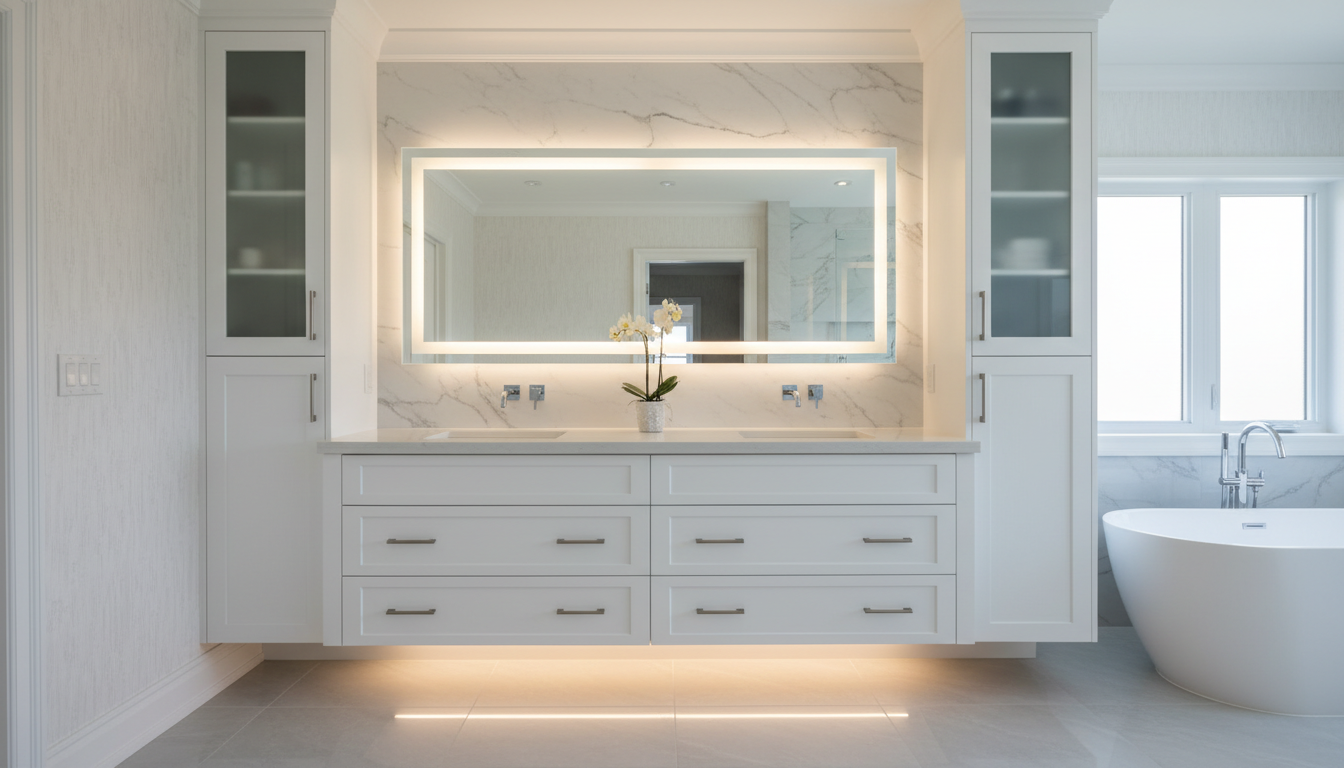
The door style is the most visible decision in any kitchen cabinet project — the one element guests notice immediately and the one you’ll see every day for the next 20–30 years. But “which door style is best?” is the wrong question. The right question is: which door style fits the way your kitchen is used, what it looks like from the living room, and how much maintenance you’re willing to do?
Here is an honest comparison of the three dominant kitchen cabinet door styles in GTA North — shaker, raised panel, and flat-panel — with the information you actually need to make the right choice for your kitchen.
The Three Main Door Styles: Quick Comparison
| Property | Shaker | Raised Panel | Flat-Panel (Slab) |
|---|---|---|---|
| Visual style | Transitional / versatile | Traditional / classic | Contemporary / modern |
| Cleaning ease | Easy (flat surfaces + one groove) | Moderate (many grooves) | Easiest (completely flat) |
| Dust accumulation | Low (rail groove only) | High (all panel edges) | None |
| Style longevity | Timeless | Classic but can date | Contemporary (trend risk) |
| Cost (relative) | Moderate | Higher (more machining) | Moderate–high (finish-dependent) |
| Best kitchen types | All — new builds, renovations | Traditional homes, formal kitchens | Open-concept, contemporary |
Shaker Cabinet Doors
Shaker is the most popular kitchen cabinet door style in North America — and has been for over 20 years. The classic shaker door has a flat recessed panel surrounded by a square-edged frame with four rails (top, bottom, and two stiles). The result is a door that reads as clean and structured without being ornate.
Why shaker dominates GTA North kitchens
- Works in any kitchen: Shaker is genuinely versatile — it works in a traditional Thornhill home and a modern Vaughan open-concept equally well, just with different hardware and finish choices
- Easy to clean: Only one interior groove to wipe — significantly easier than raised-panel profiles with multiple edges
- Style longevity: Shaker has been in continuous production since the 18th century. It will not look dated in 15 years the way highly specific contemporary styles can
- Finish flexibility: Shaker works equally well in painted MDF (factory-smooth finish), stained solid wood (natural grain character), or even high-gloss lacquer (modern version)
Shaker variations
- Standard shaker: 5-piece door (four rails + centre panel), 2–3 inch stile width, most common
- Thin-rail shaker: 1.5-inch stile — more contemporary, less traditional, pairs with flat-panel in two-tone configurations
- Beaded inset shaker: Small bead detail on the inner edge of the frame — slightly more traditional, common in transitional kitchens
- Inset shaker: Door sits flush inside the cabinet face frame rather than overlaying it — requires tighter tolerances, higher cost, but the most refined look
Raised Panel Cabinet Doors
Raised panel is the traditional choice — a door with a centre panel that is slightly raised above the frame plane, created by routing a profile around the perimeter of the panel. The result is a three-dimensional door that catches light differently at different times of day.
Where raised panel works
- Traditional homes: If your home has crown moulding, coffered ceilings, or traditional millwork throughout, raised panel cabinets are the natural complement
- Formal kitchens: Higher-end traditional kitchens — especially in larger homes in Kleinburg, King City, and Nobleton — often use raised panel with furniture-style details
- Cherry or walnut stain: The raised panel profile shows wood grain and figuring beautifully in dark stained hardwoods
Raised panel limitations
- Cleaning: Every routed edge on a raised panel door is a dust and grease trap. Kitchens with a lot of cooking produce significant grease buildup in the panel profiles over years of use
- Paint compatibility: Raised panel doors can look heavy in painted finishes — the dimensional profile that looks elegant in stained wood can look bulky in white
- Style dating risk: Very ornate raised panel profiles — particularly “cathedral arched” or heavily decorative router patterns — were associated with 1990s–2000s kitchens and can make a space look dated
Flat-Panel (Slab) Cabinet Doors
A flat-panel door has no frame and no interior profile — it is a single, completely flat door surface. In custom cabinetry, flat-panel doors are made from MDF (for painted finishes), solid wood (for stained finishes), or specialty materials like high-gloss acrylic or wood veneer.
Where flat-panel excels
- Contemporary and modern kitchens: A flat-panel door run is the defining visual element of modern kitchen design — particularly in handleless configurations with consistent 3mm gap reveals
- Easiest to clean: No grooves, no profiles — a completely flat surface wipes clean in a single pass
- High-gloss and specialty finishes: Flat panel is the only door style that works with high-gloss acrylic, high-gloss lacquer, and specialty graphic films
- Two-tone designs: Flat panel lowers in a bold colour with open shelving or shaker uppers — one of the most requested current configurations in Vaughan new builds
Flat-panel considerations
- Finish quality is visible: A flat surface shows fingerprints, scratches, and finish imperfections more readily than profiled doors — quality of the paint or lacquer matters more
- Style risk: Very minimalist flat-panel kitchens can feel stark or cold without texture-adding elements (wood countertop, open shelving, statement hardware)
Not sure which door style is right for your Vaughan kitchen?
DKC’s designers work with all three door styles daily. Book a free in-home consultation and we’ll show you examples of each style in your kitchen’s exact dimensions — so you can make the decision based on what it actually looks like, not on catalogue photos.
Book My Free Kitchen ConsultationFrequently Asked Questions
What is the most popular kitchen cabinet door style in Ontario?
Shaker — it has been the dominant choice for over 20 years because it works in traditional, transitional, and modern kitchens. Flat-panel is the fastest-growing alternative in GTA North open-concept homes.
What is the difference between shaker and raised panel?
Shaker: flat recessed panel, square-edged frame. Raised panel: centre panel routed to sit above the frame, creating a 3D profile. Shaker is cleaner and easier to maintain; raised panel is more ornate and traditional. Shaker works painted or stained; raised panel is best in stained hardwoods.
Which door style is easiest to clean?
Flat-panel (completely flat — one wipe). Then shaker (one groove per door). Raised panel is hardest — multiple routed edges collect grease and dust that require a brush or detail cloth to clean thoroughly.
Ready to choose your kitchen cabinet door style?
DKC Wooden Cabinetry builds all three styles in Vaughan and GTA North. Free in-home consultation — we’ll show you exactly what each style looks like in your kitchen before you commit to anything.
Start My Free Kitchen DesignRelated: Shaker Kitchen Cabinets Vaughan | Modern Kitchen Cabinets Vaughan | Custom Kitchen Cabinets Vaughan — HUB
nnReady to Transform Your Home?
n780+ GTA North homeowners trust DKC Wooden Cabinetry. Free in-home consultation. 3D design presentation. 10-year workmanship warranty. In-house manufacturing and installation.
nExplore DKC Custom Cabinetry Services in Vaughan & GTA North:
nReady to Transform Your Home?
780+ GTA North homeowners trust DKC Wooden Cabinetry. Furniture-grade plywood. 3D design. 10-year workmanship warranty.
Get My Free Design Consultation